Building on Evidence, Driving Ownership: “The Future of National Information Platform for Nutrition NIPN Zambia”
The National Food and Nutrition Commission in collaboration with the Zambia Statistics Agency co-host the National Information Platform for Nutrition (NIPN), a government led initiative that strengthens the use of data and evidence to inform nutrition policy, planning and decision making. The platform is implemented with financial and technical support from GIZ. Anchored within national institutions and aligned to national priorities, NIPN has significantly enhanced data analysis, strengthened multisectoral dialogue and supported more informed policy and programme decisions in nutrition.
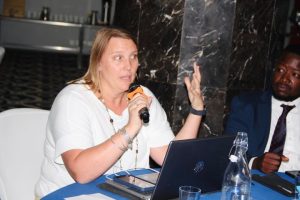
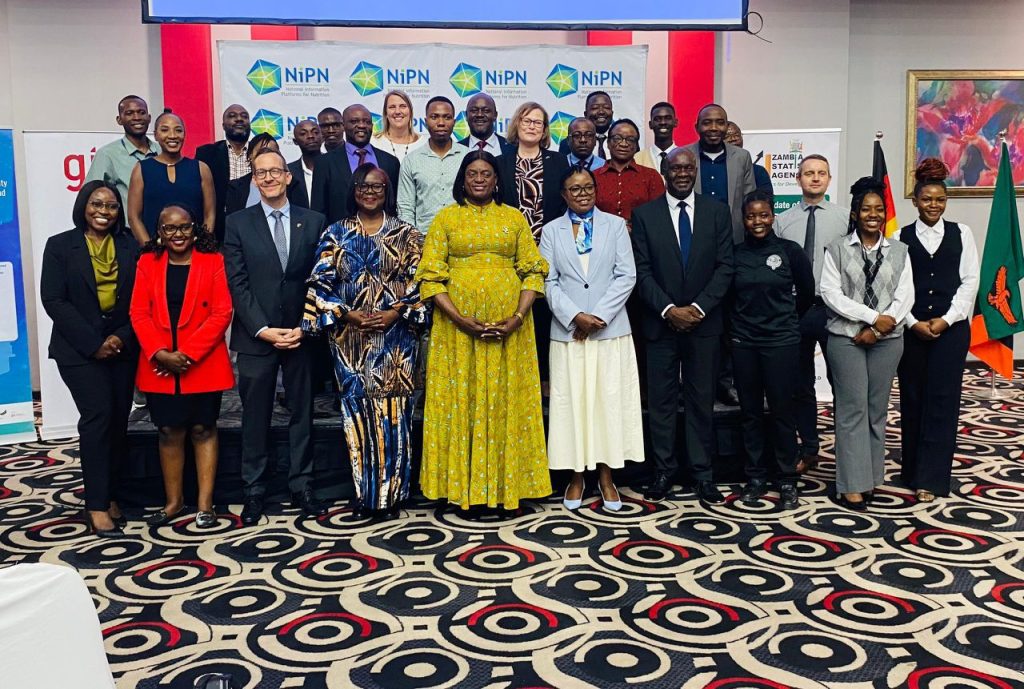
After three (3) years of bridging the gap between data and policy, NFNC and ZamStats convened a NIPN Legacy event to mark the successful conclusion of the funding phase supported by BMZ/EU. Since its inception, NIPN has strengthened the capacity of NFNC and ZamStats , transforming how Zambia tackles malnutrition through evidence-based analysis. The NIPN Legacy event whose theme was “From Evidence to Ownership: Securing NIPN Zambia’s Future”, was aimed at showcasing key achievements, disseminate final strategic insights and formally transition the platform’s operations into sustainable government structures. The event highlighted key milestones achieved since the initiative’s establishment in Zambia.
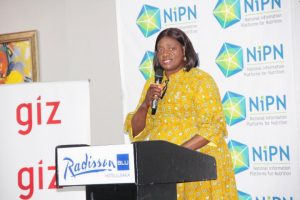
Gracing the event, the Permanent Secretary for Administration in the Office of the Vice President; Ms. Lilian Kapusana, who also officiated the launch of NIPN at its inception, commended the National Food and Nutrition Commission and its partners for their continued commitment. The Permanent Secretary noted that through NIPN, Zambia has moved beyond fragmented data systems toward a more coordinated, analytical, and policy-relevant approach to nutrition, significantly strengthening the country’s ability to generate and utilize evidence for informed decision-making.
Speaking during the event, NFNC Executive Director, Dr, Muntanga Mapani said that NIPN has been a beacon of evidence-based nutrition action. It has delivered critical insights on childhood stunting trends, shaped policy decisions through robust data analysis, and built enduring knowledge products like our multisectoral data systems. These tools have strengthened linkages from districts to national levels, informing strategies under the 1st 1000 Most Critical Days Programme and the Food and Nutrition Act, ensuring standardised responses to Zambia’s malnutrition challenges.
She also thanked the EU and GIZ for their unwavering partnership, which empowered NFNC and ZamStats to cascade technical guidance without losing fidelity across provincial, district, ward, and zonal committees. She further emphasized the importance of all institutions involved to commit to sustaining NIPN’s legacy. Therefore, presentations on NIPN Zambia’s journey, stunting trends and policy insights, and data systems will guide this handover, embedding evidence into ownership for a nourished future, she said.
Speaking at the same event, the Statistician General, Ms. Sheila Mudenda, highlighted key technical achievements by Zamstats under the initiative. She explained that ZamStats, in collaboration with the NFNC, the University of Zambia, and Deutsche Gesellschaft for International Cooperation Zambia, with technical assistance from C4N-NIPN, successfully conducted the Lives Saved Tool (LiST) training and analysis.
She noted that the training not only equipped participants with skills to utilize the tool, but also enabled practical modelling and analysis using existing data to identify high-impact interventions capable of reducing stunting in Zambia. She emphasized that the evidence generated, is critical in guiding government on priority, cost-effective interventions needed to accelerate progress towards the national target of reducing stunting from 32 percent to 15 percent by 2030.
Adding to this, the Head of Cooperation and Deputy Ambassodor at the German Embassy; Mr. Andreas Pletziger noted that Zambia is at a critical transition point. He mentioned that over the past three years, with support from the German Ministry for Economic Cooperation and Development and the European Commission, the NIPN programme has demonstrated how data and evidence can be transformed into meaningful insights for policy-making, budget planning, and the achievement of development results.
The Head of Cooperation further highlighted that the programme has strengthened collaboration across key institutions, including the National Food and Nutrition Commission, Zambia Statistics Agency, the Ministry of Health, the Office of the Vice President, and the Ministry of Finance, as well as sector ministries such as Agriculture and Livestock. This enhanced coordination has been instrumental in aligning efforts towards improved nutrition outcomes, he said.
In closing, the Zamstats Statistician General expressed pride in being part of the initiative and acknowledged the value NIPN Zambia has added to the data value chain by promoting cost-effective approaches to generating much-needed evidence for decision-makers using existing data.