ZamStats Hosts Panel Discussion on GDP Rebasing at the 2026 Zambia International Trade Fair
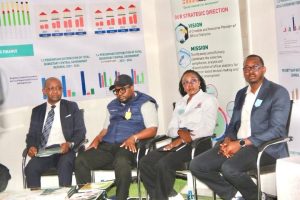
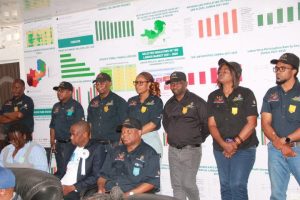
The Zambia Statistics Agency (ZamStats) hosted an insightful panel discussion on “The GDP Rebasing Exercise: Why It Matters and Its Implications for Zambia” during the 2026 Zambia International Trade Fair (ZITF) in Ndola.
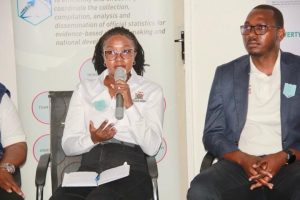
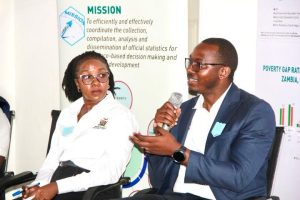
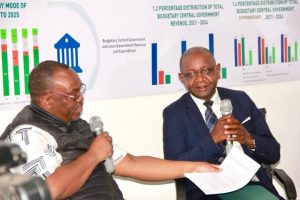
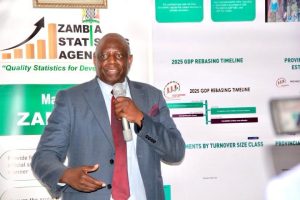
The discussion brought together experts from key economic institutions to provide the public with a deeper understanding of the ongoing Gross Domestic Product (GDP) Rebasing Exercise. Panelists explained why the exercise is being undertaken, how it reflects the evolving structure of Zambia’s economy, and its significance for economic planning, policymaking, investment, and sustainable national development.
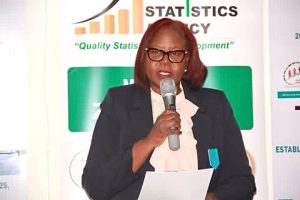
Speaking during the discussion, Statistician General, Mrs. Sheila S. Mudenda, highlighted that Zambia is rebasing its Gross Domestic Product (GDP) from the 2010 base year to 2023, in line with international best practice. She explained that rebasing is a routine statistical exercise that updates the reference year used to measure economic activity, ensuring that GDP estimates accurately reflect structural changes in the economy. She noted that the exercise will produce more accurate and reliable statistics to support national planning, policymaking, and investment decisions.
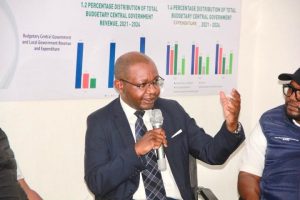
Representing the Bank of Zambia, Dr. Kegan Chisha emphasized the importance of high-quality official statistics in macroeconomic management. He noted that reliable GDP statistics are essential for inflation forecasting, economic growth projections, monetary policy formulation, and maintaining overall economic stability.
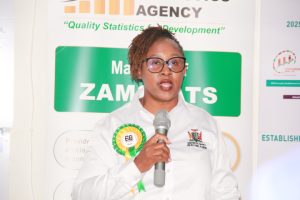
Senior Economist, Ms. Tamara Chirwa-Sitali, from the Ministry of Finance and National Planning, explained that GDP rebasing would provide a more comprehensive picture of Zambia’s economy by capturing emerging industries and structural shifts that have occurred since the last base year. She added that improved GDP estimates would strengthen fiscal planning, enhance policy formulation, and increase Zambia’s attractiveness to both domestic and foreign investors.
Providing the technical perspective, Director of Economic Statistics at ZamStats, Mr. Joseph Tembo, clarified that GDP rebasing does not create new economic activity or increase national wealth. Rather, it improves the measurement of economic performance by incorporating updated data sources, improved methodologies, and internationally accepted statistical standards. He emphasized that GDP remains one of the country’s most important economic indicators, informing budgeting, national development planning, debt sustainability assessments, and the monitoring of economic performance.
Speaking from an investment perspective, Mr. Peter Musangu of the Zambia Development Agency (ZDA) noted that accurate and up-to-date economic statistics enhance investor confidence by providing a clearer understanding of Zambia’s economic potential. He added that reliable official statistics support investment decisions, improve the country’s competitiveness, and contribute to sustainable economic growth.
The interactive discussion also provided members of the public with an opportunity to ask questions and engage directly with the panelists, reinforcing ZamStats’ commitment to promoting statistical literacy and enhancing public understanding of official statistics.
The panel concluded that GDP rebasing is a critical statistical exercise that enhances the accuracy, relevance, and credibility of Zambia’s national accounts. The panelists further emphasized that continued collaboration among government institutions, the private sector, academia, and development partners is essential for strengthening the National Statistical System and ensuring that high-quality official statistics continue to support evidence-based decision-making and Zambia’s sustainable development.